
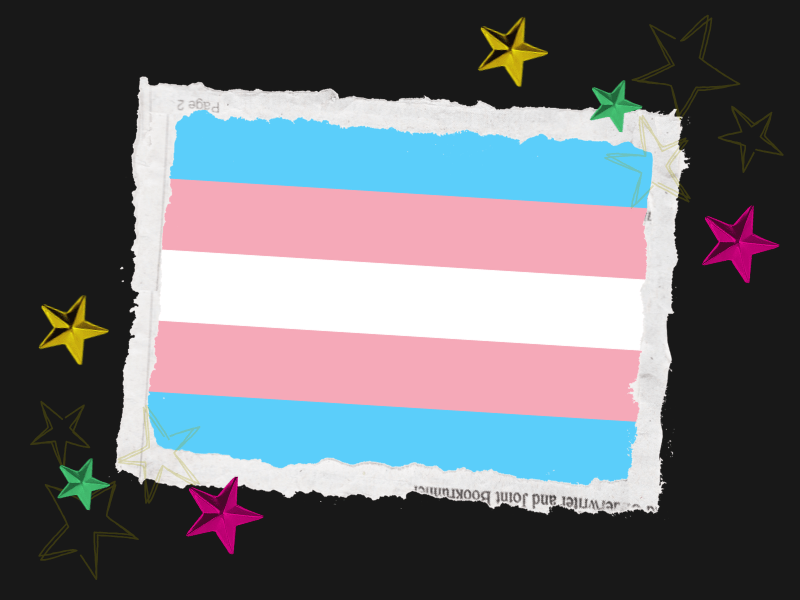
We’re hearing more and more about trans identity in the media, on social networks, and in everyday conversations. And that’s a good thing! But with all the specific vocabulary, misinformation, and fear of getting it wrong, it’s easy to feel lost. Don’t worry — we’re here to explain everything, simply, without stress or judgment — just with respect.
So, what is trans identity?
Trans identity is when a person does not identify with the gender they were assigned at birth. When a baby is born, someone checks between their legs and says, “It’s a boy” or “It’s a girl.” But that assignment doesn’t always match how the person truly experiences their gender.
A trans person is someone who identifies with a gender different from the one assigned at birth. That could be a trans man (assigned female at birth), a trans woman (assigned male), or a non-binary person — someone who doesn’t identify entirely as “man” or “woman.”
Trans identity is not a disease. It’s not a trend. It’s not a delusion. It’s a human reality, experienced in many different ways.
And most importantly: being trans isn’t about “becoming” someone else — it’s about giving yourself permission to be who you are.
Let’s bust a few common myths right away:
- You don’t become trans. It’s not a choice or a phase — it’s an identity.
- There’s no one way to be trans. Each journey is unique. There’s no “checklist” to complete.
- Trans identity has nothing to do with sexual orientation. A trans person can be straight, gay, bi, pan, asexual, etc.
- Gender isn’t always binary. “Man” and “woman” are not the only options — many cultures have recognized other gender identities for centuries.
Expanded Glossary to See Things More Clearly
Here’s a little dictionary to help understand commonly used terms:
- Transgender: a person whose lived gender does not match the one assigned at birth.
- Cisgender: a person whose gender matches the one assigned at birth.
- Non-binary: a person who does not identify exclusively as male or female.
- Gender fluid: a person whose gender identity can shift over time.
- Agender: a person who does not identify with any gender.
- Transition: the process (social, medical, administrative, etc.) a person may undergo to live in alignment with their gender. Important: not everyone transitions — and that’s okay.
- Chosen name: the name a trans person has chosen. Always respect it.
- Deadname: the former name used before transitioning — never use it.
- Pronouns: words used to refer to someone (he, she, they, etc.). Ask and respect them — it’s just basic decency.
- Misgendering: using the wrong gender when referring to someone. This can be very hurtful, especially when repeated.
- Transphobia: any hostile attitude or behavior toward trans people (discrimination, mockery, violence, erasure, etc.).
So, what exactly is transition?
Transition isn’t a requirement. It’s a personal, unique path that each person may or may not choose to take.
It can be:
- Social: changing name, asking others to use correct pronouns, dressing differently, changing appearance.
- Legal: changing name and/or gender marker on official documents.
- Medical: hormone therapy, surgeries, hair removal… But again, this is not mandatory or universal.
None of these steps is more “legitimate” than another. A person is trans the moment they identify as such — period.
Mini Q&A — The Questions We Often Ask (and That’s Okay!)
Do you need a diagnosis to be trans?
No. You don’t need a psychologist’s “validation” to know who you are. Some administrative or medical steps might require it, but your identity doesn’t need to be proven.
What if I make a mistake?
It happens. If you misgender someone or use the wrong name, just apologize, correct yourself, and try to do better. What matters is respect, not perfection.
I’m afraid of asking something inappropriate. What should I do?
Ask yourself: “Would I ask this to a cis person?” If the answer is no, keep it to yourself. Or look it up online. Trans people are not walking encyclopedias.
Can someone be trans AND non-binary?
Yes! Being trans means not identifying with the gender assigned at birth. Non-binary is one of many possible trans identities.
Why is it important to talk about this (and to listen)?
Because trans people still face:
- Verbal, physical, and bureaucratic violence
- Rejection from family or society
- Barriers to healthcare access
- Economic insecurity
- And far too often, a lack of positive representation
But they exist, they live, they create, they love, they resist — and they deserve our respect.
Want to be a good ally? Here’s how to start:
- Listen without interrupting.
- Respect people’s chosen names and pronouns.
- Don’t ask invasive questions about their bodies or private lives.
- Educate yourself without waiting to be taught everything.
- Don’t tolerate transphobic jokes or comments around you.
- Amplify trans voices, especially those of racialized, marginalized, or economically vulnerable people.
- And above all: believe people when they talk about their own experiences.
To sum up:
Trans identity isn’t a “trendy topic” — it’s a daily reality for millions of people around the world. Their existence doesn’t need to be debated — it needs to be respected.
Want to ask questions, learn, understand? You’re in the right place. Always with kindness, always with respect.




 HOME
HOME 
Leave a comment