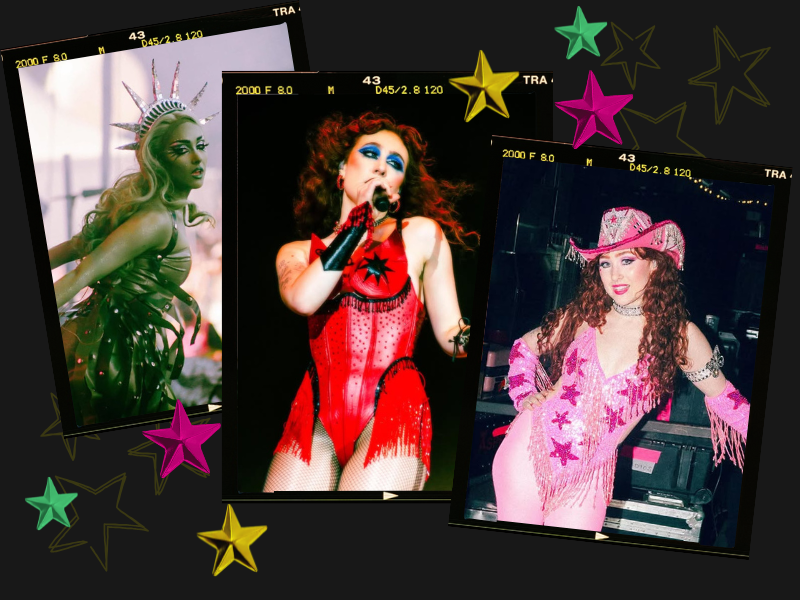
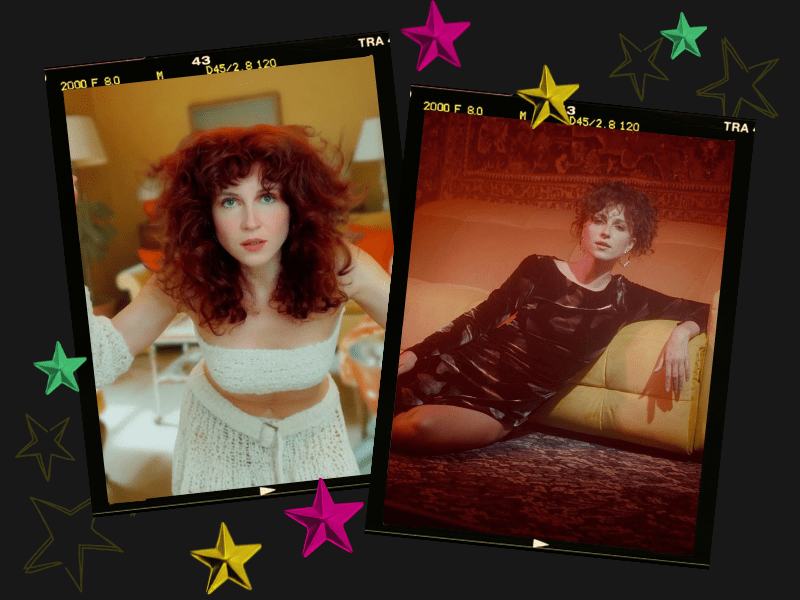
She arrives like a cotton candy thunderstorm on a California highway: glitter on her eyes, pain in her heart, a wig on her head, and heels too high for a country too straight. Chappell Roan — a portrait of a Midwest princess turned iconic pop star.
Chappell Roan, born Kayleigh Rose Amstutz, isn’t just a singer. She’s a walking performance, a drag queen who’s never done Drag Race, a tragic heroine in a satin gown crying under the spotlight. With queer anthems screamed from the sidelines and a look like a radioactive doll straight out of an end-of-the-world cabaret, she embodies a new generation of artists where pop becomes political and glitter becomes a bulletproof vest.
From Missouri to the Queer Scene: Birth of a Voluntary Exile
Born in 1998 in Willard, a small conservative town in Missouri where you learn to hide who you are just to survive, Kayleigh began singing at weddings, church events, and high school proms. Sensitive, strange, Catholic — already too bright for the place. At 17, she uploaded a cover of Rihanna’s “Stay” to YouTube. Atlantic Records noticed and signed her under the name Chappell Roan, a tribute to her late grandfather Dennis Chappell and to Joan Roan, a fictional woman, a glam fantasy version of the artist she didn’t dare to become — not yet.
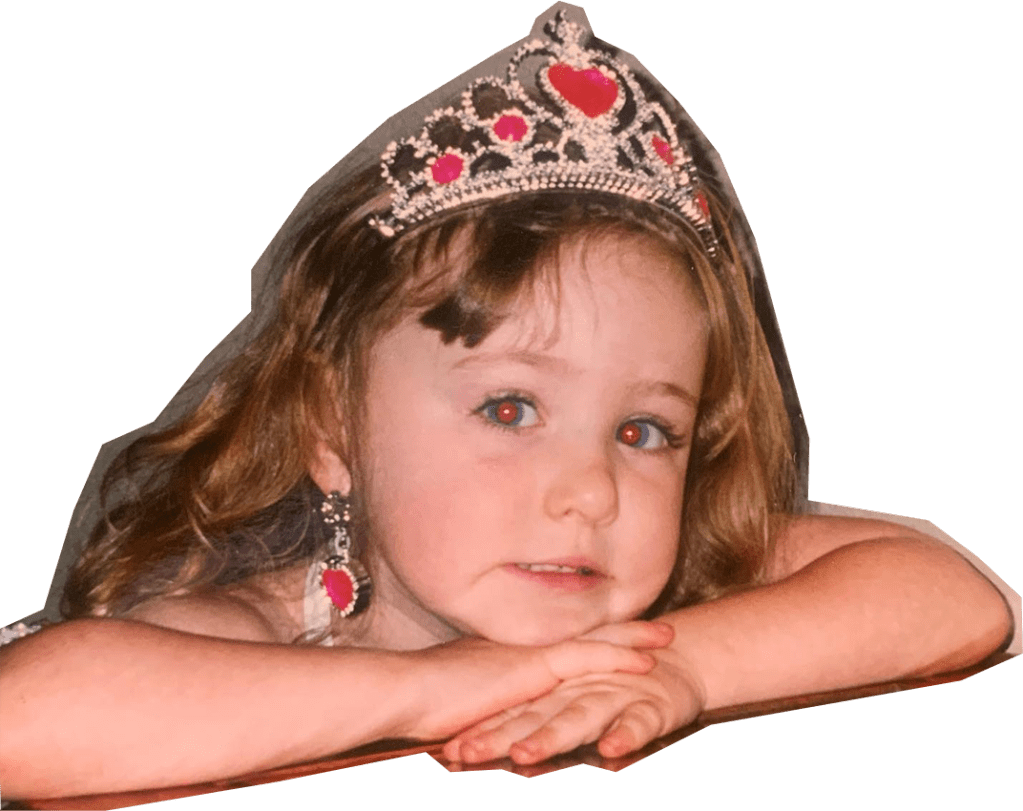
But the dream turned into a mirage. After a first EP in 2017 (School Nights) and some singles produced by Dan Nigro (now known for working with Olivia Rodrigo), the label dropped her. Too queer. Not marketable enough. Too much herself. Roan returned to Missouri, humiliated and broke. “I cried every day. I thought about quitting everything,” she told the Los Angeles Times. But that’s when the character was reborn. More flamboyant, more provocative, more her than ever before.
A Queer Pop That Screams, Cries, and Bleeds
Her debut album The Rise and Fall of a Midwest Princess, released in 2023, sounds like a war cry against the norm. Every track is either a shout of joy or a moan of pain — anthems for queer teens dancing alone in their bedrooms, for girls who love girls but don’t know how to say it yet, for boys who secretly wear lip gloss. Pink Pony Club, a disco-feminist ode to liberation and fluorescent dreams of L.A., became a cult hit on TikTok. She sings:
“I heard that there’s a special place / Where boys and girls can all be queens every single day.”
She dreams of being a dancer in a queer club, far from Missouri’s judgment — and we dream it with her.
Roan stands at a crossroads between Lady Gaga’s Fame Monster era, a RuPaul drag queen, and a brokenhearted poet. Her voice, often compared to Lana Del Rey’s for its melancholy, soars over electro-pop productions that hit like stilettos in the face of decency. In Red Wine Supernova, love becomes a cosmic trip on something strong; Naked in Manhattan turns a lesbian fling into a queer self-affirmation anthem. The track HOT TO GO! blends cheerleaders and chants, pop trance and raw sexuality in a queer parade that flirts with the grotesque and the sublime.
Queer Woman, Drag Goddess: Fashion as Performance
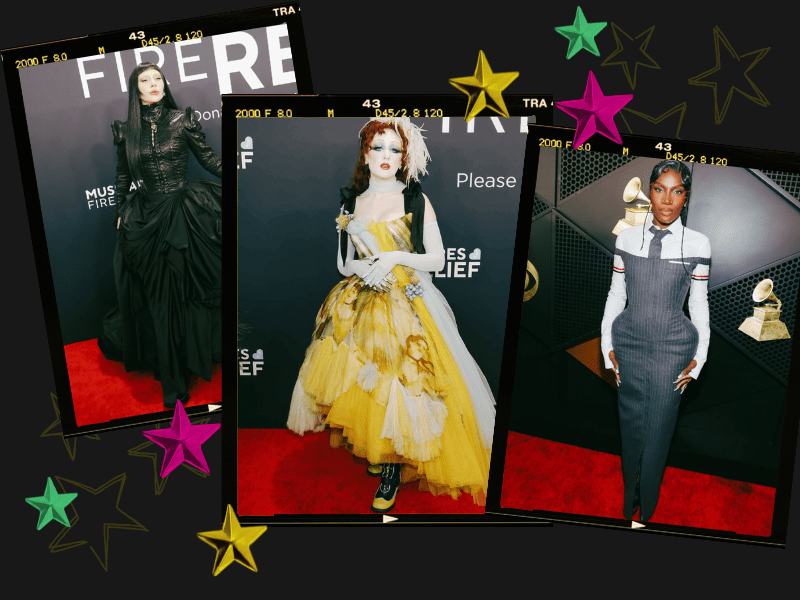
Chappell Roan doesn’t have a style. She has ten. She’s the Midwest Princess in a blood-stained prom dress, the punk cowgirl in a fringe mini-short, the damsel in distress who saves herself. She draws from drag, burlesque, Y2K aesthetics, and queer counterculture to create looks that scream both love and rage.
“I dress like a drag queen because I feel like myself when I do. I’ve always wanted to be that girl, that exaggeration of femininity, because I was taught I couldn’t be her,” she told Interview Magazine.
Every concert is a runway. Every music video, a manifesto. She cites Divine, Lady Miss Kier, and the 90s club kids as inspirations. Her stylist Genesis Webb helps her craft larger-than-life characters somewhere between Barbie’s nightmare and freakish beauty. Chappell doesn’t play fashion — she destroys it and rebuilds it in her image, in a world where camp is a weapon of mass disruption against boredom and the binary.
Radically Committed: Pride, Politics, and Queer Exhaustion
Chappell Roan doesn’t just sing queer love — she lives it, defends it, waves it like a torn but invincible banner. She refuses to perform at festivals sponsored by anti-LGBTQ+ companies. She speaks openly about depression, struggles, and how hard it is to be a queer woman in a cis-het male-dominated industry. In a 2024 concert, she declared:
“I’m not gonna tone it down to be more palatable. I’m gay as hell and this is a safe space.”
She claims shame as a legacy to burn, and suffering as an aesthetic to reshape.
She’s also one of the few mainstream artists to show queerness beyond soft clichés: in her world, lesbian love can be toxic, freedom is painful, and pleasure is political. She sings for those who’ve never heard their story in a pop song. She echoes their forgotten voices.
Punk of the Heart, Princess of Failures, Rising Star of Chaos
Chappell Roan is living proof you can fail, fall, cry, shave your head, come back, and burn it all down to shine brighter. She’s not polished. She’s not perfect. She’s raw, glorious, poetic, imperfect — a glitter punk with crepe paper wings, singing like her life depends on it.
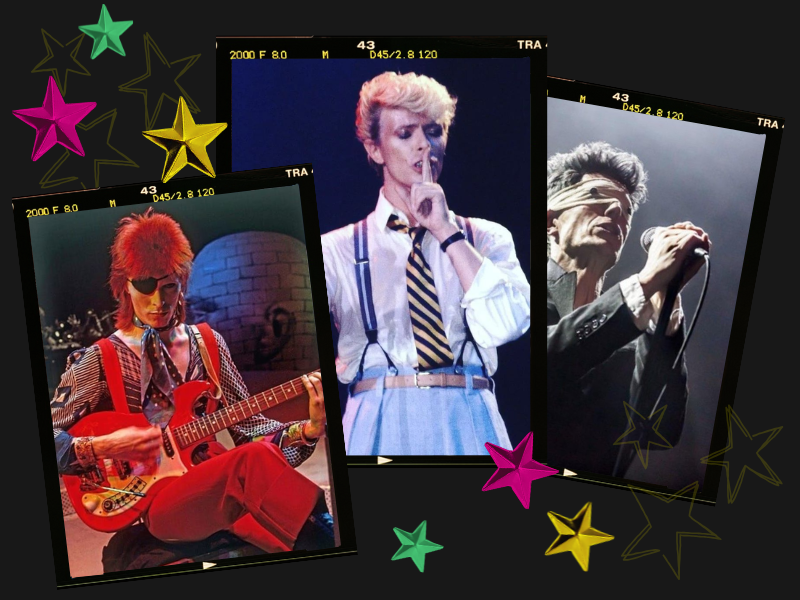
She’s the girl Missouri didn’t want to keep. The girl everyone was waiting for without knowing it. A queer star shining for those left in the dark. Heir to Bowie and Gaga — but also a brand new voice: louder, pinker, freer.
 HOME
HOME 
Leave a comment