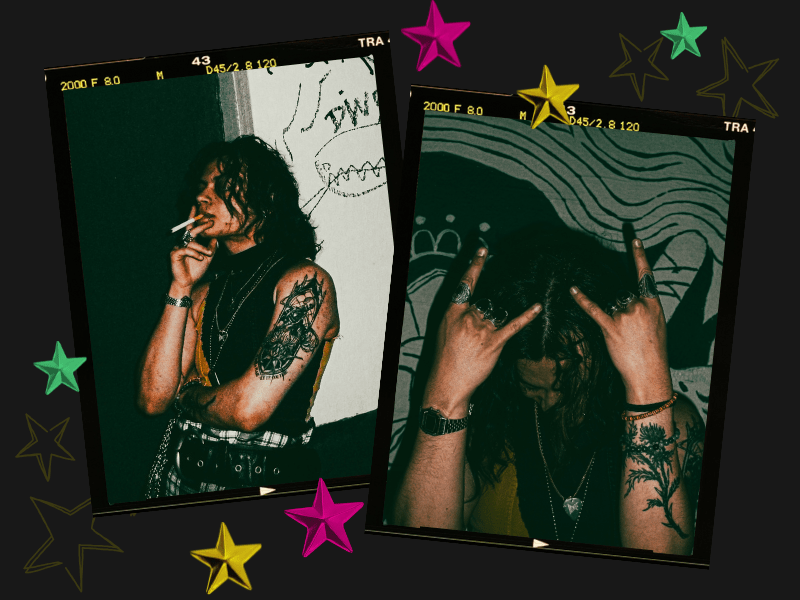
Creator, reader, shapeshifter: Ezekiel wields his art like both armor and offering. Through cosplay, music, studies, and intimate battles, he speaks of fashion as a site of resistance and self-affirmation, of gender as a shifting language, of music as refuge, and of the masks we choose to better reveal ourselves.
He’s twenty years old and carries whole worlds in his pockets. A student in English literature at the Sorbonne, Ezekiel doesn’t just read fiction—he inhabits it, twists it, embodies it. As a content creator and cosplayer (currently on pause, though “it won’t ever really stop,” he says with a crooked smile), he crafts characters the way you write poems: with precision, passion, and quiet rebellion. His body becomes a narrative, his clothes manifestos, his voice a tightrope stretched between the margins. In this interview, we talk about fashion as a war cry against norms, gender as a sacred fire that burns through labels, music as visceral refuge, and all the ways one can bend norms into living, vibrant, irreducible works of art.
I: You’re very active on TikTok and Instagram — what got you into content creation, and how did you find your voice on these platforms?
I started by writing poetry. Then one day, a friend told me I looked like Regulus Black from Harry Potter. I didn’t really know the fandom, but I got curious. I began cosplaying him in September 2022, kind of on a whim. At the time, I had fewer than 10,000 followers. By late October, I had 12,000. Two or three weeks later, it was 42,000. In December, 134,000. In January, 200K. It happened really fast. But that’s pretty common in cosplay—if you resemble a character, people project that onto you, and then it’s up to you what you do with it. It’s kind of like the “face claim” days of Wattpad.
I: How would you describe your clothing style? Has it evolved alongside your identity?
Totally. I had a big emo phase, and even if it’s more subtle now, it’s still part of me. Back then, I got bullied for it: I was “the goth girl,” even though by the book, I wasn’t really goth. I wore kohl eyeliner, rock band tees, I listened to that music… I was basically that blue-haired feminist emo lesbian, if you want to stereotype. In middle school, I wanted to be a fashion designer. I drew a lot. I got my first sewing machine at eight years old, and even if what I made was terrible, I still made it. I still have a T-shirt I created from scraps of denim—it totally fits the punk aesthetic, with visible stitching and damaged fabrics. I’ve always been into second-hand stuff. I think I was never as stylistically free as I was in middle school. Nowadays, the way I dress is more politicized. Even unconsciously, I think I was already projecting my values through clothes. When you see me in the street, you can guess a lot about my views. I love subverting things—wearing a tie as a belt, repurposing clothes. I look for dissonance.
I: What’s your relationship to fashion? Do you see it as a way to express your identity?
Absolutely. Fashion, to me, is an art. And art is political. Creating is expressing yourself. Expressing yourself means taking a stance. And taking a stance means situating yourself in society. So it’s political. Some days, I literally go home to change because what I’m wearing doesn’t feel like me. Clothes are my way of speaking without opening my mouth. It’s a tool for self-affirmation, comfort, sometimes even survival.
I: Do you think fashion can be a tool for empowerment and self-affirmation for queer people?
Yes, though there’s still work to do. Fashion is this huge playground for experimenting and reclaiming your body, your gender, your place. But there are still codes that need to be dismantled. And at the same time, it’s good they exist—just so we can break them. Fashion helps me a lot with my gender identity. It’s like armor, but also a language. I can say, “I’m here, I’m like this,” without needing to explain. But sometimes you want to lean into a cliché, just so people perceive you the way you want. And that creates a real dissonance.
I: Are there any designers, creators, or styles that particularly inspire you?
I’ve always had a soft spot for Vivienne Westwood—the history, the Sex Pistols, the punk aesthetic. But through my studies, I realized how much the punk movement has been co-opted and digested by mainstream fashion. It’s not really punk anymore. So now I’m more drawn to smaller creators online. People who sew their own clothes, who are into DIY, raw, sincere stuff. My love for tartan didn’t come out of nowhere, though.
I: Have you ever felt pressured to “perform” a certain image through fashion, especially as a trans person?
Honestly, I’m lucky. I lean quite clearly toward masculinity, in both gender and presentation. So I never really had to justify myself. But I still have cis-heteronormative reflexes. The fact that I didn’t explore femininity earlier is because I thought, “If I’m a guy, I have to wear a cap and baggy pants like a skater or footballer.” And as soon as I wear something more feminine, or don’t wear my binder, I feel watched. That’s a real topic in the queer community—validity. People see your chest and think you’re not a man anymore? It’s ridiculous. But I do have privilege, for sure. I’m a white trans guy, with a relatively normed body. You want to be seen a certain way, so you conform—even if it means erasing parts of yourself.
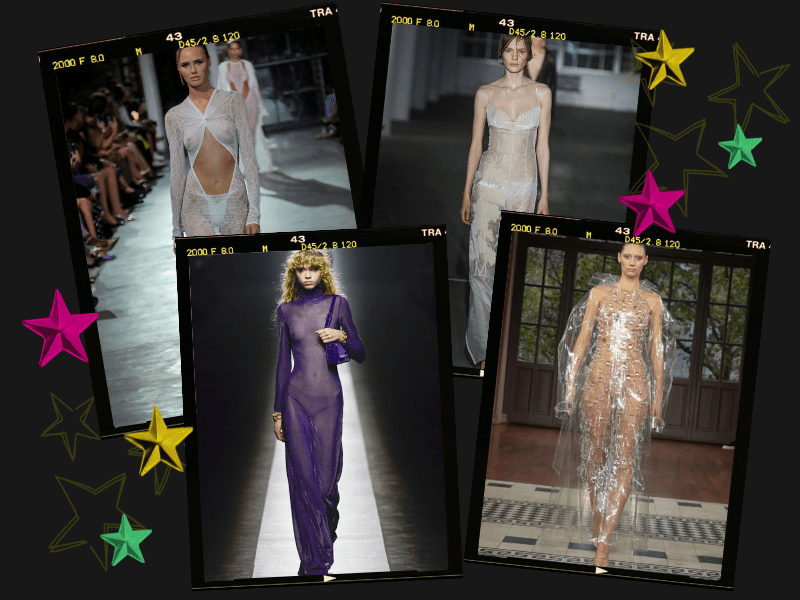
I: How do you envision the future of fashion in terms of trans and queer inclusivity? Do you want more trans people on runways or less commodification of inclusivity?
Honestly, I’m so over the tokenization. I wake up, open my socials, and expect to see another political co-optation. We’re flirting with appropriation. Yes, it’s great that we’re talking more about trans identities and gender exploration. And obviously, cis people can explore gender too—it should be open to everyone. But democratizing means questioning what we’re doing. And queer culture, at its core, is exactly that: questioning, constant evolution. Compare a queer person from the ’80s or Stonewall to a queer person today—it’s not the same culture. There’s fluidity, a constant shift. Of course we need visibility, but it’s a double-edged sword. It can be freeing, but also dangerous. And often, it comes with clichés. Where are the studs, for example? We still depict lesbians as white, blonde, short-haired women with a vaguely masculine look. It’s exhausting. Same for trans people: we’re put into boxes. We don’t all look alike—and that’s normal. There are as many ways to be trans as there are trans people. What we need is more diversity, not more stereotypes. Today, media capitalize on our identities. They put a price on our faces. So yes, let’s spotlight trans people—but not just on screen. We need them behind the camera too, in production, direction, crews. We need to stop speaking for us and start speaking with us. That’s why I think it’s essential to support indie films, queer and BIPOC collectives, short films on YouTube, and small creators on Insta or TikTok. These folks have a human, sincere, honest approach. What we’re seeing more and more is a “Hollywoodization” of trans people. Apart from Hunter Schafer, who refuses to only play trans roles, most trans actresses are stuck in that image. And then people accuse us of making our identity our whole personality—while on screen, that’s all we’re allowed to be. It’s hypocritical.
I: Do you make your cosplays entirely yourself, or is it a mix of creation, buying, and customizing?
At first, I bought a lot from Aliexpress—not gonna lie. My Hua Cheng cosplay is full Ali. Except the contacts, makeup, and some details. But that outfit was super complex. I could’ve commissioned someone, sure. Now I’ve put cosplay on hold because I have too many ideas, and I don’t want to fall back into fast fashion. No way. Since then, I’ve switched to Vinted. For my genderbend Princess Mononoke, I found everything on there. A blue jumpsuit, a white T-shirt, which I burned. I made the spear from cardboard and wood. Same for Choso (Jujutsu Kaisen), I used curtains. I really try to make stuff myself, even if I’m still learning to sew—but I’m working on it.
I: What do you enjoy most in creating a cosplay: the design, the making, or the moment when you embody it?
All of it. And none of it. They’re such different things. The creative side and the performance side are two completely different vibes. I only cosplay characters who resemble me—physically or mentally. That’s why I feel comfortable. It’s super comforting in terms of identity. But you have to be careful, because you really project yourself into it. It’s a bit intense, but at the same time, it’s also a kind of therapy. Each stage gives me something different.
I: Has cosplay helped you explore or affirm your gender identity? Was there a moment when you felt particularly aligned with yourself thanks to a cosplay?
Regulus Black. Despite all the issues linked to the fandom the character comes from—and my own experiences in it—it was the first time someone compared me to a boy. That moment sparked not just my cosplay account, but also my journey with gender. Cosplay brought something to light that I had buried really deep.
I: What role does music play in your life and identity? Are there any queer artists who particularly inspire you?
I have a really strong and complicated relationship with music. I’m kind of the cliché of the rocker dad passing down his music taste. Apparently, my mom used to put headphones on her belly to play Evanescence when I was in the womb—it calmed me down. Music has been with me forever. I don’t play any instruments, unfortunately, even though I’ve always wanted to—especially the drums. I also did choir in middle school. Music is everywhere in my life—I can’t live without it. It’s the foundation of my survival, of my art in general, of how I see the world, of my identity. It’s this floating, enveloping art form, and I’m in love with music. One day, when I have the time and money, I’ll take drum lessons. That’s my dream. Until then, I catch myself drumming on stuff without realizing it when I’m working or thinking. But one day, I’ll do it for real.
I: Are there any songs or albums that really impacted you in your personal journey?
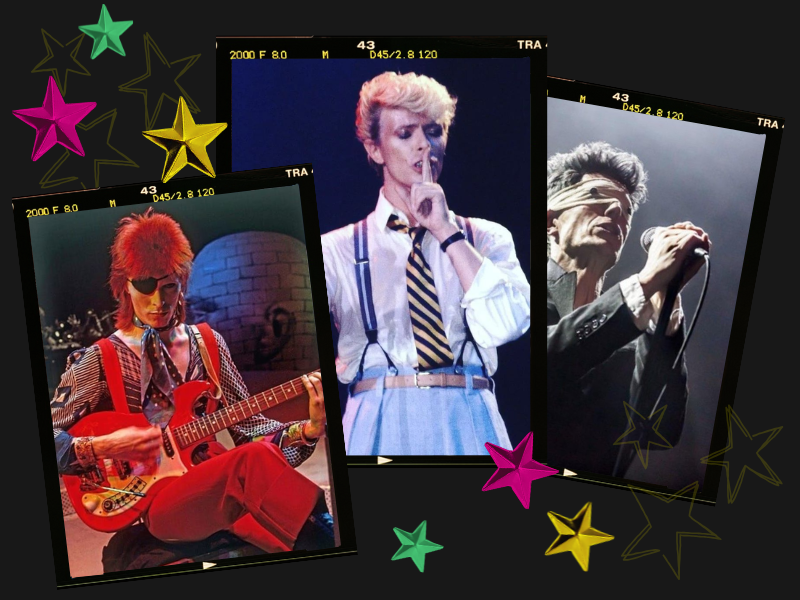
I’m a big-time depressive, so Use Your Illusion by Guns N’ Roses hit hard. Civil War was my first real moment of political awakening—that’s when a lot clicked for me. It lit a fire in my story, gave me a way to express my values. I’ve always loved rock—Bowie, Radiohead. It all started with Creep, that feeling of not belonging, of not being in the right place. I’m totally obsessed—they’re my favorite band. They hit you like a punch. I also listen to Red Hot Chili Peppers, Twenty One Pilots, Inhaler, Jeff Buckley, Hozier—especially Wasteland, Baby! An album that defined my whole high school experience was That’s the Spirit by Bring Me The Horizon.
I: If you had to associate one song with your identity or your journey, which one would it be, and why?
One track that really speaks to me is Product of My Own Design by Artio. It talks openly about being trans—it’s not pure punk, but it’s super powerful. I see myself completely in it. It’s incredibly empowering. It gives me strength.
 HOME
HOME 
Leave a comment