
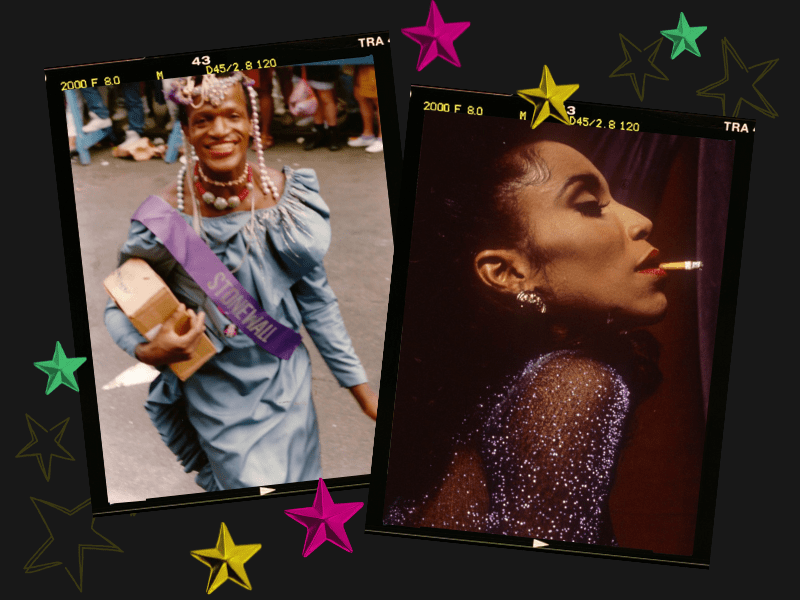
Between invisibility, stereotypes, and symbolic violence, trans people remain caught in the net of a society that would rather portray them than listen to them. Behind the sensational stories or the heavy silences lie real lives, concrete struggles, and an urgent need to rethink what visibility truly means.
They are here. They live, laugh, love, create, dress, survive, exist. But in the cold reflection of television, in the one-way mirrors of talk shows, in the scripts of blockbuster films — they are nowhere to be seen. Or if they are, they are misrepresented. Misseen, misspoken, miswritten. Trans people are indeed present, but the media seems to view them through a murky lens: blurred, caricatured, criminalized, or worse — ignored.
Absence as a program
In series, films, primetime shows, trans faces are rare. Far too rare. A 2023 GLAAD study revealed that only 0.6% of primetime TV characters were transgender, while trans people make up around 1.5% of the global population. The gap is glaring. When pop culture shapes our imagination, our empathy, our ability to understand others, that absence becomes political.
You can’t become what you can’t see. The collective imagination feeds on stories, faces, names. The absence of human, complex, positive trans characters stops one generation from recognizing itself and another from understanding. To render invisible is already to dehumanize.
When the spotlight becomes a distorted lens
And when trans people are shown, it’s often through the lens of sensationalism, strangeness, raw suffering, or danger. The film Emilia Pérez is a recent example: a so-called “progressive” work that tells the story of a trans woman, a reformed trans drug lord who abandons her family to transitions. Disguised as a critique, the film recycles tired tropes of the criminal crossdresser, the trans body as narrative device, the transformation as plot twist. In the rush to talk about trans people, we forget to give them the floor.
Cinema history is full of these toxic portrayals: from The Silence of the Lambs to Dallas Buyers Club, trans characters have been boxed into three roles — victim, monster, or exception. Rarely the neighbor, the lover, the teacher, the friend, the star. This obsession with tragic and medicalized stories reinforces the idea that transness is pain, anomaly, or trauma.
Media Monsters, Real Violence
This symbolic violence has real consequences. In France, according to the organization OUTrans, 72% of trans people have contemplated suicide, and nearly half have attempted it. These chilling numbers don’t fall from the sky. They are born in a world that misgenders, ridicules, ostracizes. A world where debates about other people’s identities are held without those concerned — broadcast live on TV, with pundits who confuse free speech with veiled violence.
Add to this increasingly repressive laws in certain countries: in 2024, Italy banned medical transition for minors; Arkansas passed a law prohibiting gender-affirming care for trans youth; and more than 500 anti-trans bills were introduced in the U.S. in just one year. Meanwhile, hate speech explodes on social media, driven by algorithms that favor clash and buzz over nuance and listening.
Bodies of Flesh and Flame
And yet. Trans people exist, resist, persist. They don’t ask to be role models — only to be seen as human beings. They create beauty in a hostile world. They imagine gentler, freer futures. Transness is not a problem to be solved, but a reality to be understood, a richness to be celebrated, a powerful lens through which to rethink gender, bodies, and norms.
The media must stop being the cracked mirror of a binary society. It must become a window. A space for those who live at the margins. Stories made with, not about. Make room for trans creators, trans actors, trans journalists, trans dreamers.
From Invisibility to Insurrection
Because we can no longer settle for pitiful or sensationalist portrayals. What we need are ordinary, beautiful stories. Trans characters who aren’t metaphors, props, or “lessons in tolerance,” but just people. Complex, radiant, imperfect.
Where mainstream media still refuse to pass the mic, voices rise elsewhere: on YouTube, on TikTok, in independent podcasts, in zines, in the margins — where revolutions are always born.
Trans people aren’t asking for permission to exist. They exist. They dance, love, cry, dress, speak. Their existence is punk poetry — a scream of truth in a world that prefers binary fiction. It’s time to listen — truly.
 HOME
HOME 
Leave a comment