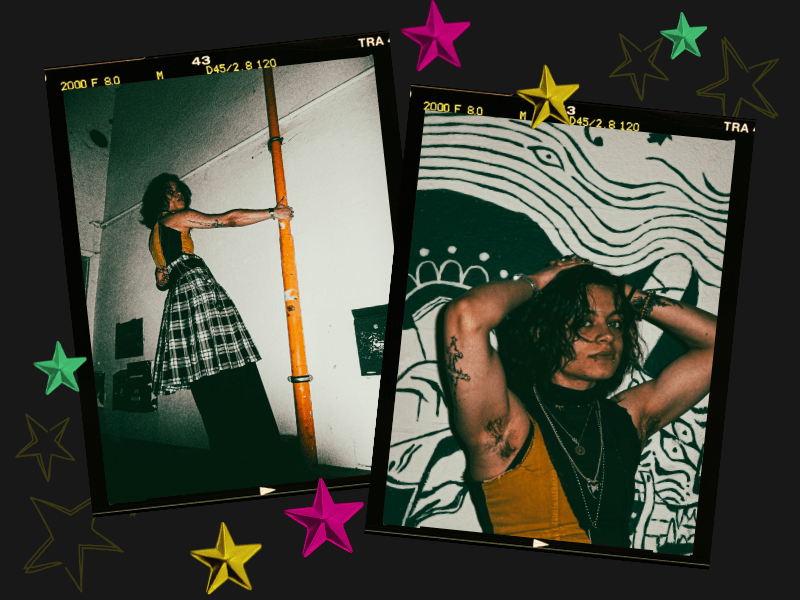
Behind the makeup and costumes lie invisible scars, healing words, and sacred rage. Ezekiel wields poetry like one draws a blade: to slice through the norm, to make silence bleed, and to speak of what burns beneath the skin. In this second part, we talk about trans identity, queer struggles, and writing as survival.
Talking with Ezekiel is like stepping into a living, trembling, untamed language. His poetry doesn’t seek to please—it cuts, it testifies. It comes from the gut, from sleepless nights and days spent fighting to exist without apologizing. Here, it’s no longer just about style or aesthetics: we speak of gender as a battlefield, identity as a chorus of voices, and poetry as a deafening scream. Through his verses and his battles, Ezekiel rejects boxes, compromises, and silences, and holds up a mirror where the possibility of a freer world still burns.
I: When did you start exploring and understanding your gender identity?
I think it goes back to when I was around six. In first grade, I was already very androgynous, I complained a lot, spent all my time with boys, and flat-out refused to wear skirts. My mom used to call me “my son” jokingly, because I really wanted to be a boy—running around, climbing trees, tearing up my clothes, even getting into fights… I really was a little boy. I wondered why people didn’t treat me like the other boys, why some of them didn’t want to play with me the same way. I didn’t get it.
When puberty hit, I went into denial, because your body starts changing and it messes everything up. I had a hard time accepting those changes—I just kept telling myself, “Ezekiel, you’re a woman.” That blurry childhood line, where I could play with both boys and girls, disappeared. Up until about 8th or 9th grade, I still saw myself as a tomboy. I also went through a “lesbian phase,” like many trans people do. I identified as non-binary around that time, and it became a sort of bridge to my trans identity. But deep down, I knew since I was six who I really was. What took time was acceptance—about ten years. I had almost no trans representation in media or around me, so without crutches, it was hard. If no one tells you it’s possible, you don’t know it exists.
I: How has your relationship with yourself evolved since becoming more comfortable with your identity?
It might sound silly, but it’s mostly helped me explore my femininity. I believe we all have some level of internalized transphobia, whether active or passive, because it’s a societal norm we have to unlearn. Testosterone and transitioning changed my life, and I’ll never stop advocating for that. When you’re trans and can’t “pass” (be perceived as cis), so many doors close. It creates more dysphoria than self-discovery. But if you can give yourself time, with social safety nets in place, you can ask yourself, “How far do I want to explore my femininity?” And that’s when I really found myself. I’m still figuring things out, but I let myself navigate a femininity that fits me right now. I’ve been in this phase for a few months—there’s still more to unlock. I’d say I’m more comfortable in my femininity, even as I move toward my masculinity too.
I: The idea of “passing” is often a pressure on trans people. How do you relate to that notion?
I hate the concept. But paradoxically, sometimes I catch myself thinking, “No, you really look like a woman, don’t go out like that”—which is absurd. At first, I never thought, “He’s wearing a skirt, so he’s not trans”—that’s an exaggeration. But I also thought, “He’s not helping himself.” Luckily, I pulled myself out of that mindset. I think it comes from social fear: if you don’t protect yourself, you’re not protecting others. It’s a toxic projection.
I also don’t want to talk about what I don’t have the legitimacy to speak for, as a white person with privilege, but we absolutely need to listen to racialized and non-Western voices. Western norms of trans identity are very real and get imposed worldwide, which is a problem. For instance, “cis-passing” in an Asian person doesn’t follow the same standards as in Europe. There’s ethnic and cultural oppression at play—it’s plain ethnocentrism.
Passing is like asking, “Is abstract art beautiful?” Depending on culture, education, perspective, you might think being thin is very masculine, whereas in another culture it’s the opposite. Somewhere, you’ll always “pass.” Imposing a fixed standard on something inherently fluid makes no sense.
There are as many trans identities as there are trans people. As many masculinities as masculine people, as many femininities as feminine ones. But I get that passing can be a form of safety. Personally, I like to think I “pass,” but I don’t treat it like a prison. It’s more of a life raft.
I: Are there people, creators, or works that helped you in your journey?
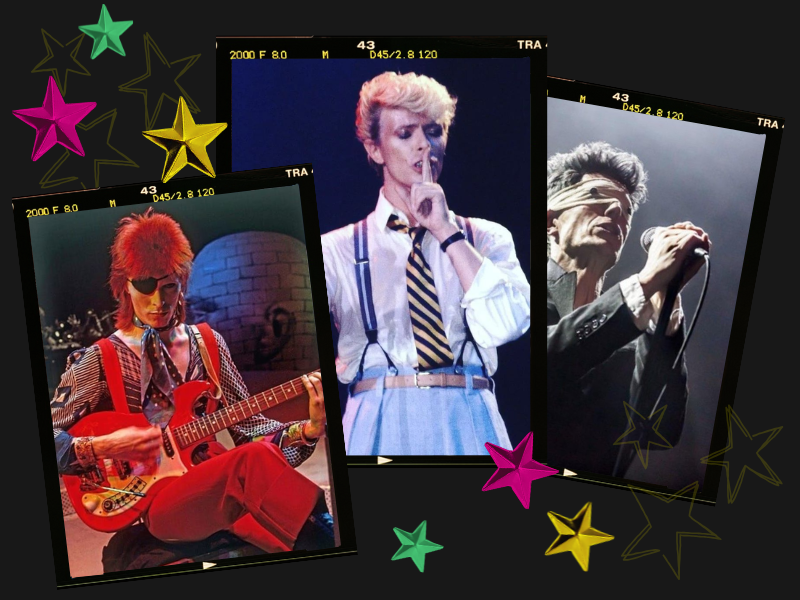
The Picture of Dorian Gray, of course, with its queer undertones. Not necessarily trans, but because it’s queer, we can reclaim it. It’s about identity—whether biological or not. It’s full of layers. Mulan too—it made me realize two things: the androgyny in the film pushed me to question my gender, and Mulan became a precursor of both my trans identity and bisexuality. I used to think, “Mulan, get top surgery, stop binding—it’s dangerous!” Queer coding helped me question myself a lot. Bowie, Prince—those are two major icons for me.
I: Was there a key moment when you felt more aligned with yourself?
I think it was when I gave myself permission not to be sure. I realized this would evolve, and that’s how it should be. It’s hard for trans people to accept change—we tend to want to reach some fixed “gender goal.” But you also have to accept that things shift. If it bothers you, it means you’re growing. Between 18 and 20, it’s normal to change. I let myself explore, fall, get back up. I made peace with things I don’t like—like my height. The day I don’t care about being 5’3”, I’ll really be aligned with myself. I also made peace with being misgendered because of my medium-length hair. Since the end of January, I’ve been doing great.
I: How do you find support in the queer community? Are there things that still need to improve?
There’s both good and bad—personally and collectively. As a bisexual trans person—two highly discriminated labels in the community—it’s complicated. These two parts of my identity belong to groups that often clash. It’s hard to feel at peace when those groups constantly question your validity—whether it’s being bi as a trans person or the other way around. I got lucky with my bisexuality, but being trans was harder. I have a lot of privilege as a trans man, not like a trans woman.
There’s fetishization by lesbians and straight men of trans men’s bodies. To them, it often looks like a heterosexual relationship because of genitals. Even cis gay people can invalidate your homosexuality by saying you’re not “really” gay. There’s also the genital preference issue—I support it as long as there’s respect.
There’s a lot of work to do around memory—especially since the T was removed from the Stonewall memorial. I wrote a poem about that. Forgetting the trans pioneers of the Stonewall riots is unthinkable—just like forgetting lesbians during the AIDS crisis. We have to protect that memory—it’s an act of inheritance to build the future.
Sometimes, though I can’t cite specific examples, I feel like some gay and lesbian folks fear that trans people are “stealing the spotlight”—that they’re no longer “queer enough” next to us. That mindset exists, like trans people are getting more visibility. And sure, we are—but it’s because we’re getting killed more. It’s darker on our side. There’s real historical preservation and reconstruction to be done.
I: Has writing played a role in your transition journey and in affirming yourself?
I’m a walking cliché. I’m a poète maudit. I have a tattoo of Baudelaire. Les Fleurs du mal is a collection that saved my life. I’m planning tattoos of Edgar Allan Poe. I’ve been mentally guided by poetry from a very young age. I was born into a fairly literary family. My dad used to enter poetry contests. I found that out much later when I stumbled across his early poems and thought they were mine—we have a very similar style. I really hate saying this, but it’s kind of in my blood, I was raised with an artistic sensitivity. I’ve always read a lot, written a lot. I started writing as soon as I learned how. I think I could probably find the beginnings of my gender questioning in my old writings. Putting ink to paper made it more concrete. The more I wrote, the more my rhymes sharpened, the more my gender emerged. I could feel it, I wrote it, I let it out.
My writing really sees sorrow as something beautiful. I love metaphors, and I think in some way they helped me find my gender identity. I think my stylistic figures mirror my identity.
I: Is there a poem you’ve written that particularly reflects your experience as a trans person?
Yes, I have one. It’s called Hétérogène. It’s my greatest poetic pride to this day. I wrote it in the middle of a dysphoria crisis. When I finished it, I felt calm. And when things are rough, I go back and read it. It’s not a hopeful poem. It’s a little fatalistic. I’m really proud of it. It was deeply therapeutic. Historically and technically, it’s heavy. It’s truly my soul. It’s who I am, it’s the contours of my identity.
I: If you could give one piece of advice to someone questioning their identity, what would it be?
Surround yourself with friends, but not in a way that becomes overbearing. Look for the questions before you try to find the answers, and don’t look for them in other people right away. Being supported is important, but first, focus on yourself—on what you think, not on what others think. I wasted so much time worrying about how people saw me, I held myself back way too much. Give yourself room to make mistakes. Don’t lock yourself into rigid frameworks while you’re discovering yourself. There are no limits: explore everything you can, whether it’s online or in books. Try, fail, try again, succeed. Don’t close any doors. Don’t panic—or if you do, panic surrounded. It’s a challenge, sure, but it’s also an incredible opportunity. Don’t put yourself in a box that could end up becoming a cage.
 HOME
HOME 
Leave a comment