
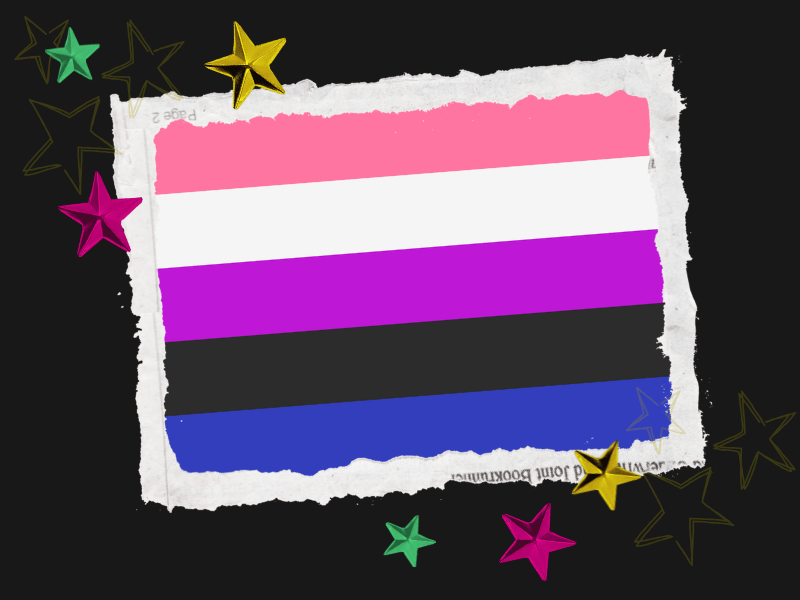
We live in a world that often treats gender as a fixed point: male or female, end of story. But for some people, gender isn’t a straight line—it’s more like a rhythm, a shifting landscape, or a tide. That’s where genderfluidity comes in.
Want to understand what being genderfluid means, without saying something clumsy or hurtful by accident? You’re in the right place.
So… what is genderfluid?
A genderfluid person is someone whose gender identity changes over time.
That change might be daily, weekly, over years, or depending on mood, context, or personal growth. They might feel like a woman some days, a man on others, and at other times non-binary, agender, or something else entirely. For some people, the shift is subtle; for others, it’s more visible or dramatic. And it’s all valid.
Genderfluidity isn’t about being confused. It’s not indecision. It’s an identity in itself—a dynamic relationship to gender.
Quick reminder:
- Sex = assigned at birth (based on genitals).
- Gender identity = who you are inside.
- Gender expression = how you present (clothes, voice, behavior).
These don’t have to align. A genderfluid person might dress in a traditionally “masculine” way one day, “feminine” the next—or blend things constantly.
Genderfluidity in the big queer galaxy:
Genderfluidity is a type of non-binary identity. That means it exists outside the traditional “man/woman” binary. But not all non-binary people are genderfluid—and not all genderfluid people use the term non-binary. Identity is personal.
Here are a few related terms:
- Genderfluid: someone whose gender shifts over time or depending on context.
- Bigender: someone who identifies with two genders (either simultaneously or alternating).
- Agender: someone who doesn’t feel any gender.
- Polygender: someone who identifies with multiple genders.
- Demifluid: someone who partially experiences fluidity.
- Non-binary: umbrella term for genders outside the binary.
- Transgender: someone whose gender identity doesn’t match the sex they were assigned at birth. Some genderfluid people identify as trans, some don’t.
“So… what pronouns do I use?”
You ask. And then you use them.
Genderfluid people might:
- Use one set of pronouns always (like they/them),
- Switch pronouns depending on how they feel (she/he/they),
- Use neopronouns (like xe/xem or others),
- Or ask you to use their name instead of pronouns.
Don’t worry about being perfect—just be respectful. If you mess up, apologize, correct yourself, and move on.
Mini FAQ — for the doubters, questioners, and learning allies:
“Is genderfluidity real?”
Yes. If someone tells you their gender is fluid, that’s real. You don’t need to feel it to believe it.
“Isn’t it just a phase?”
Even if someone’s identity changes over time, that doesn’t make it any less real. Exploring and evolving is part of being human.
“But if their gender changes, how do I keep up?”
By listening. By asking how someone wants to be referred to, and adapting. Like you would for someone changing their name, job, or haircut. It’s not that deep—unless you make it so.
“Isn’t it exhausting?”
Sometimes, for the person navigating it—especially in a binary-centered world. But not because of their identity. Because of how society reacts to it.
“What if I don’t get it?”
You don’t have to get it to respect it.
How to be a good ally to genderfluid people:
- Don’t mock or dismiss their fluidity.
- Use their pronouns and names—even if they change.
- Never say things like “make up your mind” or “that’s too complicated.”
- Amplify genderfluid voices (especially BIPOC and disabled genderfluid people).
- Normalize gender expression that changes.
- Stop assuming gender is fixed just because it might be for you.
In short:
Genderfluidity is a beautiful, dynamic identity that challenges how we think about gender—and opens space for more honest ways of being.
You don’t need to put someone in a box to respect them.
You just need to trust that they know themselves better than anyone else.


 HOME
HOME 
Leave a comment